The best time to visit Amboseli for Kilimanjaro views is the dry season — but that is only part of the answer. The month matters. The time of day matters more. And the number of mornings you give yourself matters most of all.
Many visitors to Amboseli make the mistake of choosing the right month and then missing the mountain because they treated it as a backdrop that appears on its own schedule. In Amboseli, the mountain demands active planning. Cloud builds quickly after mid-morning even in the driest months. The peak is most visible in the first two hours after dawn, and that window closes fast. Matching the right season with the right trip structure is what turns Kilimanjaro from a lucky bonus into a realistic goal.
Best Months for Kilimanjaro Views
The strongest windows are:
- June through October
- January through February
Why these periods lead: lower rainfall means less atmospheric moisture, which means less cloud formation in the early hours. The mountain sits at 5,895 metres and generates its own weather system, but in drier months the surrounding air is clear enough that dawn views are consistent rather than occasional.
Seasonal guidance for Amboseli is consistent on this point. The core dry season from June through October provides the most reliable Kilimanjaro mornings, with July through September typically offering the best mountain visibility rates. January and February perform strongly as a secondary window, with clear mornings that are excellent for photography before cloud builds.
Why Dry Season Works
The main obstacle to seeing Kilimanjaro is cloud. Moisture in the air feeds cloud formation, and cloud formation obscures a mountain that is already playing visual hide-and-seek at its scale. Dry months reduce the moisture supply that feeds overnight and early-morning cloud.
In wet periods:
- Moisture accumulates through the day and overnight
- Cloud can form and hold at altitude longer
- The mountain can disappear for two or three full days even during a visit
In drier periods:
- Nights are colder and cleaner
- Dawn starts with less residual cloud
- The window between sunrise and mid-morning cloud buildup is longer and more reliable
This is why mountain-focused visitors consistently do best in the dry windows. More mornings with clear skies, and a better chance that the first view at dawn is the clear one.
Best Time of Day to See Kilimanjaro from Amboseli
This is the most important practical point:
Dawn and early morning are the only reliable window.
Kilimanjaro from Amboseli should be treated as a morning objective. The guidance on this is consistent: the mountain is most visible between sunrise and mid-morning, often best before 9 a.m. After that, thermal heating generates cloud that frequently wraps the upper sections of the mountain and does not always clear again the same day.
What this means in practice:
- Set dawn game drives as non-negotiable on every Amboseli morning
- Do not treat the morning as a slow breakfast and casual start
- Position yourself in areas with clear southern or south-western sight lines before the light strengthens fully
- Be at your viewing spot before the sun is well up
For travellers who specifically made the Amboseli trip because of the Kilimanjaro-plus-elephants image, a lazy morning is not recoverable. The light and the mountain cooperate in the same narrow window, and that window opens and closes whether you are watching or not.
January and February vs June Through October
Both windows produce excellent Kilimanjaro views. The differences are worth understanding.
January and February:
- Mountain views are strong, particularly in January
- The landscape retains some greenness from the December rains, giving a different visual quality to elephant-and-mountain compositions
- Visitor numbers are lower and camp rates ease below peak
- The main trade-off is that the landscape is not at its driest, and the classic short-grass Amboseli atmosphere is less pronounced
June through October:
- The strongest overall mountain reliability window
- Easier road and game-drive conditions with fully dry terrain
- Classic Amboseli dry-season atmosphere — open plains, short grass, clear horizon
- Higher demand, particularly in July and August
For travellers whose primary goal is a clean mountain backdrop with elephants, both periods deliver. If you want the classic Amboseli dry-season image with Kilimanjaro, choose June through October. If you want clear mountain views with a greener, more atmospheric landscape, January and February are competitive.
March Through May and November Through December
These wetter periods can still produce Kilimanjaro views, and sometimes the views that follow heavy overnight rain are exceptional — the air is scrubbed clean and the mountain appears with unusual clarity. But these are exceptions rather than planning bases.
The longer cloud-formation periods in wetter months mean that even when the mountain does appear, you need several mornings to get one clean, useful view. For a traveller who has built the entire trip around the mountain, wetter periods are a significant gamble.
Planning for Multiple Mornings
Month selection is one part of the Kilimanjaro equation. Trip length is the other.
A single-night Amboseli trip gives you one dawn. If that dawn is cloudy, you have no backup. For any traveller who specifically wants Kilimanjaro, a single night is not enough.
Two nights gives two dawns and a meaningful improvement in odds. Three nights is where the mountain becomes a realistic expectation rather than a hopeful target.
The practical rule for Kilimanjaro-focused visits:
- One-night trip: acceptable as part of a larger itinerary, but do not center the trip on the mountain
- Two nights: workable, with two dawn attempts
- Three nights: the right baseline for mountain photography
This logic applies even in the strongest months. July gives you better odds than April, but July with one night is still less likely to deliver than January with three nights.
Where the Best Views Happen
Positioning matters alongside timing. The best Kilimanjaro views from Amboseli come from areas with unobstructed sight lines to the south-southwest.
Practical positioning advice:
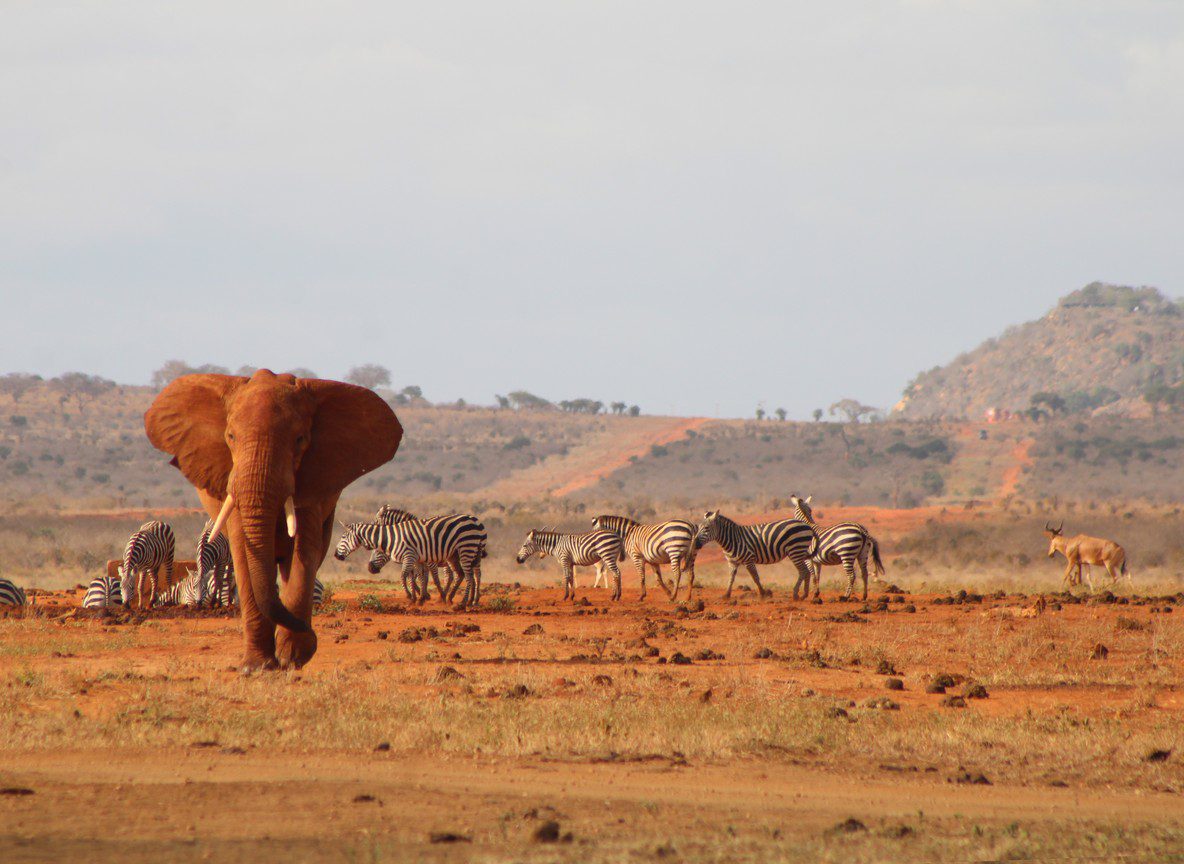
- Open plains areas offer the widest field of view and allow elephants or other wildlife to create foreground scale in front of the mountain
- Observation Hill provides an elevated panoramic view useful for reading the whole landscape and understanding where the mountain is clearing
- Some of the most powerful images are made in the open plains areas where the scale relationship between elephants and the summit is most dramatic
The mountain from Observation Hill is impressive as a landscape overview. But most photographers find that the iconic elephant-and-Kilimanjaro image comes from ground level on the open plains, where the animals fill the frame naturally with the summit rising behind them.
Which Travellers Should Prioritize Mountain Timing Most
Not every Amboseli visitor needs to prioritize Kilimanjaro timing above all other factors. But some travellers should.
Photographers: If the mountain is part of the specific image you came to make, choose the right month and build in minimum two nights.
Honeymooners: The Kilimanjaro backdrop is part of the romance and drama of Amboseli. It deserves a dry-season window and enough mornings to find it.
First-time safari guests: Kilimanjaro is often the dream image people have before they arrive. Booking in the right season protects that expectation.
For travellers who see the mountain as a bonus rather than a primary goal, the seasonal calculus is looser. Even in wet months, Kilimanjaro appears on clear mornings, and a single clear morning can produce extraordinary views.
Quick Comparison: Mountain Timing by Season
| Period | Mountain Reliability | Best For | Main Trade-off |
|---|---|---|---|
| January to February | High | Clear dawn views with fresher scenery | Less classic dry-season feel |
| June to October | Very High | Best overall mountain timing, classic dry-season atmosphere | Higher demand and prices |
| March to May | Lower | Green scenery and mood | Cloud and rain risk |
| November to December | Variable | Fewer crowds and atmospheric skies | Less predictable summit visibility |
Practical Planning Notes
For mountain photography specifically: July through September gives the most consistent mornings. January is the best dry-month alternative outside the main season.
Dawn departures: Structure every Amboseli morning around a dawn start. Mid-morning departures miss both the mountain and the best elephant activity.
Stay length: Two nights minimum if the mountain is important, three nights if it is the centerpiece.
Vehicle choice: A private or semi-private vehicle allows you to wait at a good viewing position without being on a shared group schedule. For photographers who want to work the mountain scene carefully, this matters.
For broader Amboseli seasonal planning and park comparisons, see the Amboseli guides at touringinsights.com. For current field conditions and camp availability around mountain-view timing, trunktrailssafaris.com maintains seasonal ground reports.
Reader Next Steps
- Read the full month-by-month Amboseli season guide at touringinsights.com
- Explore elephant photography timing that maximizes mountain chances at touringinsights.com
- Compare Amboseli dry-season versus green-season experiences at touringinsights.com
- Check current mountain visibility reports and camp availability at trunktrailssafaris.com
Prefer a different route, budget, or travel style? This plan can be adapted to fit.
Customise Your Trip